





high-bay-vs-low-bay-light-fixtures-whats-the-difference
What is Bay Lighting?
A bay light is a specialized lighting fixture designed to illuminate a large area, typically characterized by high ceilings. The term “Bay” refers to the internal bays common in warehouse structures.
Generally, bay lighting fixtures are mounted onto ceilings to provide powerful illumination while minimizing glare. The primary characteristic distinguishing High Bay from Low Bay fixtures is the intendedceiling height, but they also differ significantly in power, beam angle, and installation methods.

High Bay vs. Low Bay: The Core Differences
1. Installation Height
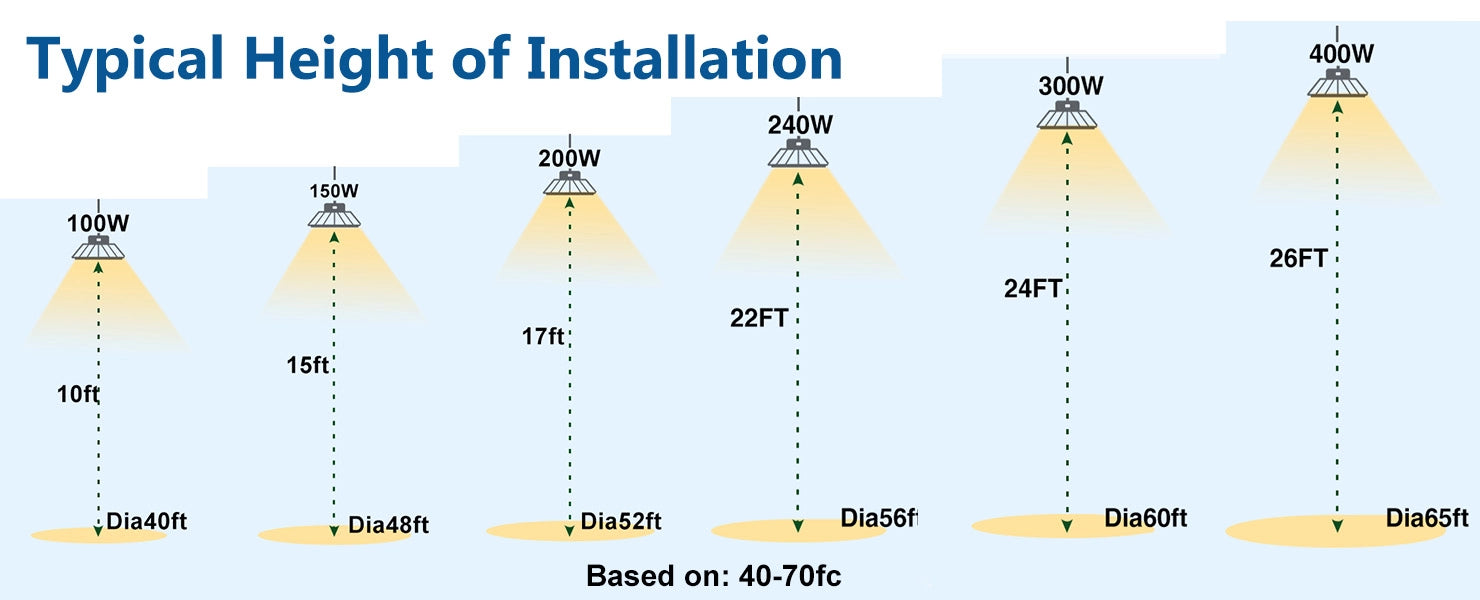
The most definitive way to compare high bay and low bay lighting is by measuring the ceiling height of the application.
- Low Bay Fixtures:These are designed for ceilings with mounting heights between12 and 20 feet.
- High Bay Fixtures:These are engineered for much higher ceilings, typically ranging from20 to 45 feet. At these heights, the light must travel a significant distance without losing intensity.
2. Light Strength and Wattage
Because High Bay lights are placed higher up, they must produce a more powerful lumen output to ensure the light reaches the floor effectively.
- Low Bay Lighting:Generally operates at lower power, typicallybelow 100 watts. Since the fixture is closer to the ground, it does not require massive intensity to light the space.
- High Bay Lighting:Usually operatesabove 100 watts. This higher power capacity is necessary to penetrate the vertical distance of the room and provide adequate illumination for the floor and lower levels.

3. Beam Angle
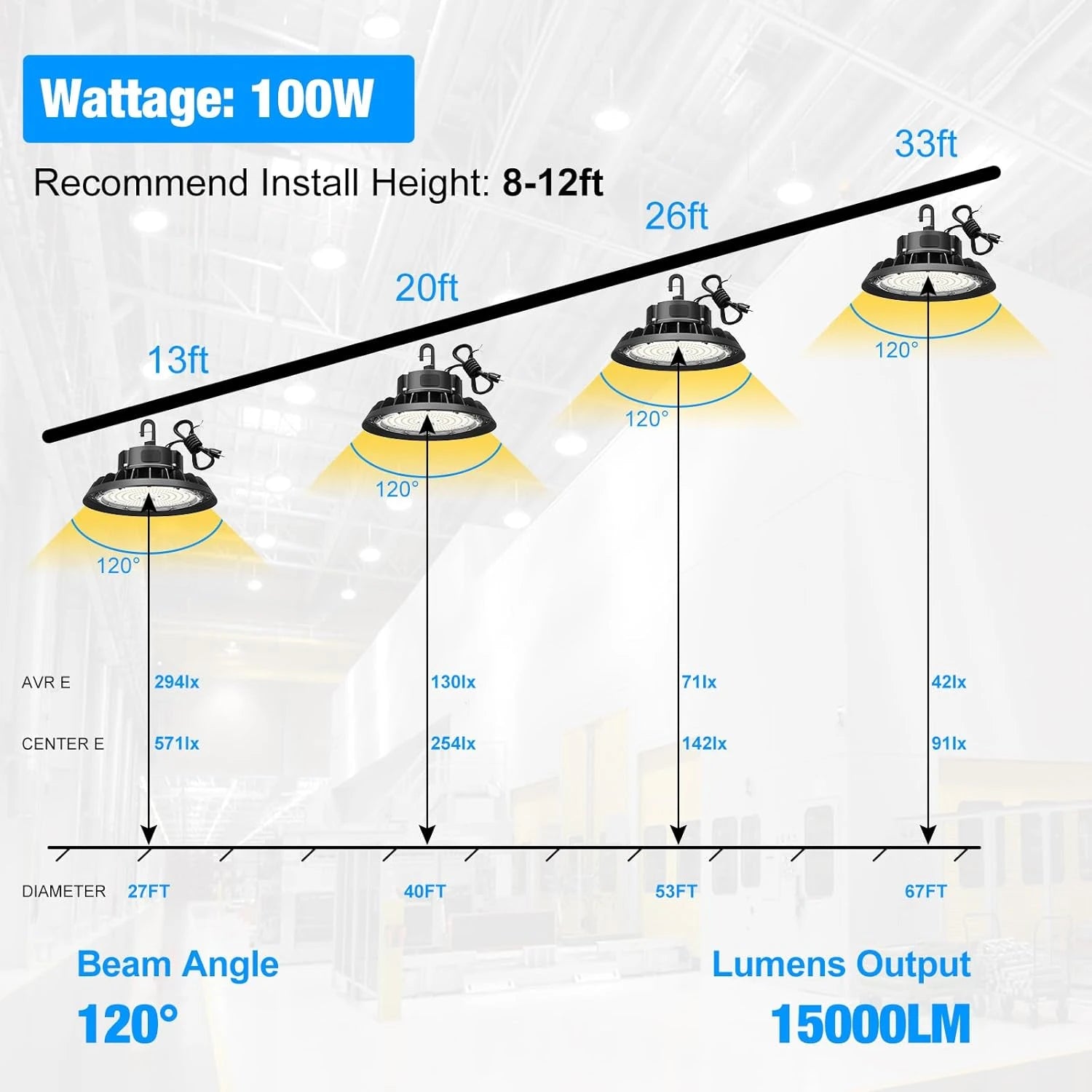
The beam angle—the measurement of the light’s spread—is critical in directing light to where it is needed most without creating glare or dark spots.
-
High Bay Lighting:
High bay fixtures typically utilize beam angles such as60°, 90°, and 120°.- Narrow Beam (e.g., 60°):A narrower beam angle helps create a more focused light stream. This is essential for High Bay applications to punch light down from a great height and provide a high lux level on the floor.
- Vertical Lighting Consideration:In warehouse settings, vertical lighting is often just as important as floor lighting. High Bay lights must be powerful enough to illuminate vertical surfaces, such as shelves, facilitating easier item picking and inventory management.
-
Low Bay Lighting:
Low bay lights typically feature a wider beam angle, commonly around120°.- Since these fixtures are mounted closer to the ground and in spaces with lower roof heights, a wider beam angle allows for excellent light distribution across large open areas.
- Lens Angles:Low bay fixtures often employ lens angles to spread the light further. These lenses help maintain the desired lighting level by diffusing the intensity and directing light into specific areas to prevent glare for people working below.
4. Mounting Options
The physical methods used to attach these fixtures to the ceiling vary based on their design and weight.
Low Bay Lighting:
These fixtures are generally suspension mounted usingchains or hooks. This method allows for easy installation and positional adjustments at lower heights.-
High Bay Lighting:
High bay fixtures offer greater versatility in mounting. They can be hung from the ceiling using hooks, chains, or pendants. Alternatively, they can be fixed directly to the ceiling structure, similar to a troffer light. The variety of fixtures available for high bays includes:- Grid-mount high-bays
- Linear high-bays
- Round high-bays
- Architectural high-bays

How to Choose the Right Bay Lighting
When selecting between High Bay and Low Bay fixtures, consider the following factors to ensure you meet the specific needs of your space:
- Measure the Ceiling Height:Your first step is always to measure the mounting height. If it is under 20 feet, Low Bay is usually the choice. Above 20 feet requires High Bay.
-
Determine the Required Beam Angle:
- High Bay:Choose a narrower beam (e.g., 60° or 90°) if you need intense light on the floor in very tall spaces, or if you need to spotlight tall shelving units.
- Low Bay:Stick to wider angles (120°) to ensure even coverage in aisles, workshops, or retail spaces with lower ceilings.
- Power Requirements:Match the wattage to the height. High spaces need High Bay wattage to overcome the distance; low spaces can utilize Low Bay wattage to save energy without over-illuminating.
- Select the Mounting Style:Decide whether your infrastructure supports a suspended chain system (common for Low Bays) or if a direct ceiling mount or pendant mount is better suited for the location (common for High Bays).
-
Consider Aesthetics and Shape:
- High Bay:You can choose between linear high-bays (good for long aisles) or round high-bays/architectural high-bays (good for general open area lighting).
- Low Bay:Look for fixtures with diffusing lenses that blend seamlessly into the lower ceiling environment.
- Color Temperature:While both types can support various color temperatures (CCT), ensure the chosen temperature suits the task. Cooler temperatures (4000K-5000K) are generally preferred in warehouses for visibility, while retail spaces may opt for warmer tones depending on the ambiance.
Summary
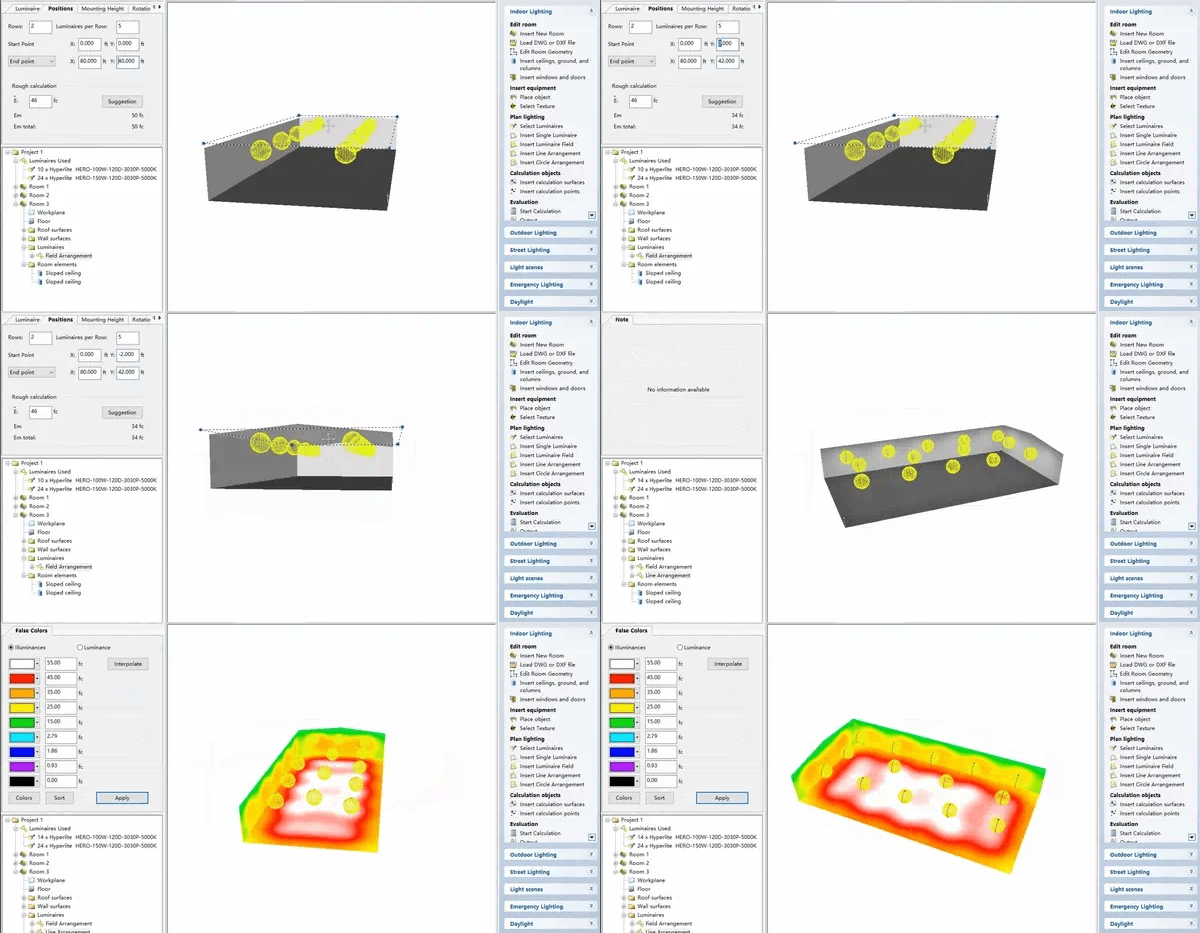
The decision between High Bay and Low Bay lighting comes down to the physics of light distance and distribution. Low Bay fixtures (12-20 ft) rely on wider beam angles and lower wattage to evenly light nearby spaces, often suspended by chains. High Bay fixtures (20-45 ft) utilize higher wattage and variable beam angles to deliver focused light from greater heights, capable of illuminating both floors and vertical shelving. By carefully assessing your ceiling height and application needs, you can select the fixture that provides the best visibility and performance.