




On this page
In the complex landscape of international trade, the tariffs implemented during the Trump era have cast a long shadow over various industries, andthe US LED lighting marketis no exception. These policies, initially imposed to protect domestic manufacturers and rebalance trade, have instead created a ripple effect ofsystematic cost inflationacrossLED lights,LED shop lights,commercial outdoor lighting,commercial LED lighting, andUFO LED lights—products that underpin everything from household energy efficiency to industrial productivity. This article unpacks how these tariffs continue to reshape the market, strain American businesses, and drive shifts in industry behavior.
The Cost Inflation Conundrum: How Tariffs Hit Every Segment
1. LED Lights (General Household & Small Commercial Use)
BasicLED lights—the backbone of residential and small-scale commercial lighting—have seen prices surge due to tariffs on imported components likeLED chipsanddrivers, nearly 80% of which were sourced from China pre-2018. For example, a standard 60W equivalent LED bulb, which cost $2.50 in 2017, now averages $3.25—a 30% increase—after manufacturers passed on25% tariff costson semiconductor materials. This not only hurts consumer wallets but slows the adoption of energy-efficient solutions, with retrofit projects in apartments and small offices delayed by budget constraints.

2. LED Shop Lights (Warehouses, Factories, Retail Stores)
LED shop lights, critical for illuminating large commercial spaces, face even steeper cost hikes. These fixtures require high-outputLED modulesand durable metal casings, both subject to tariffs on aluminum (25%) and specialized circuit boards (15%). A mid-sized warehouse outfitting 100 shop lights now spends $12,000 more than in 2018—an increase driven equally by component taxes and supply chain chaos. Small manufacturers, already squeezed by thin margins, report delaying upgrades or switching to less efficient alternatives, sacrificing long-term energy savings for short-term cost control.

3. Commercial Outdoor Lighting (Streetlights, Parking Lots, Landscapes)
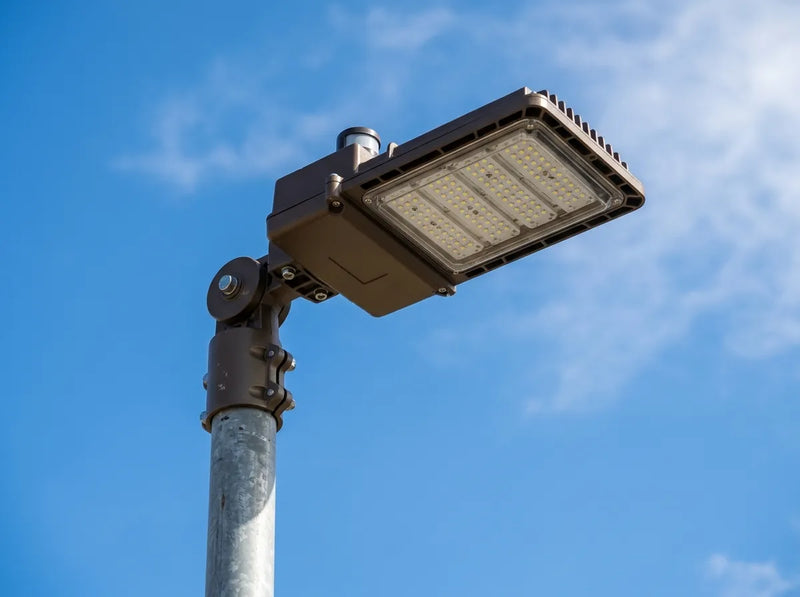
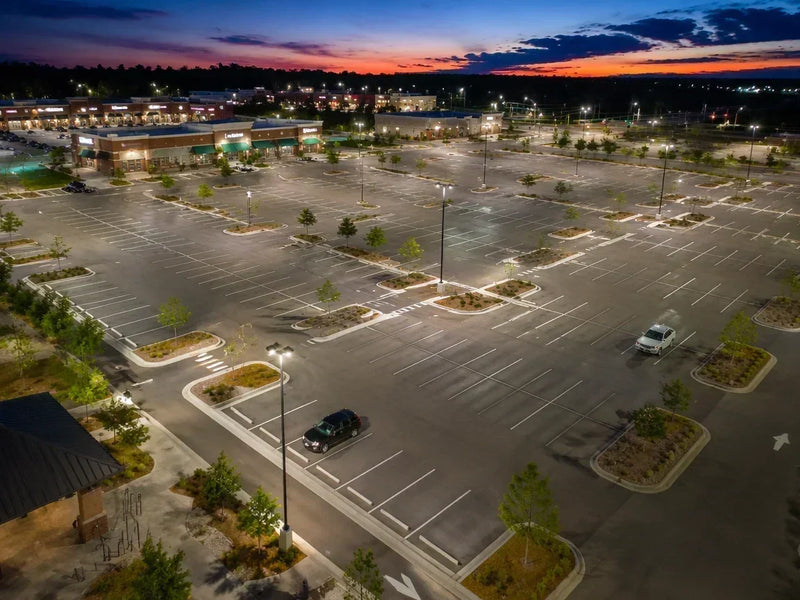
Municipal and commercial projects foroutdoor lightinghave been derailed by tariff-induced price spikes. Aluminum casings for streetlights, imported from China and subject to10% tariffs, now account for 30% of production costs (up from 20% in 2017). Add tariffs on weather-resistant coatings and smart control modules, and the cost of a single parking lot light has jumped 22%. Cities like Phoenix and Houston have paused $50 million in energy-efficient upgrades, prioritizing budget stability over sustainability—a tradeoff that risks higher long-term maintenance costs.
4. Commercial LED Lighting (Offices, Hotels, Hospitals)
The broad category ofcommercial LED lighting, encompassing everything from dimmable office panels to hospitality chandeliers, relies on a global supply chain for components likeLED arrays, drivers, and smart sensors. Tariffs on these parts have inflated manufacturing costs by 18%, forcing companies like Signify (formerly Philips Lighting) to raise prices by 15% and absorb a 3% margin hit. The uncertainty has also chilled investment: R&D budgets for energy-saving tech dropped 10% in 2024, as firms prioritized navigating tariff paperwork over innovation.

5. UFO LED Lights (Industrial Warehouses, High-Bay Facilities)
UFO LED lights, prized for their high lumen output in industrial settings, have been hit by30% tariffson their large-format LED chips and heavy-duty drivers. A single 200W UFO fixture, used to light warehouses or manufacturing plants, now costs $150—$40 more than in 2018. Industrial clients, who once upgraded to save 40% on energy bills, are now delaying projects, with adoption rates falling 12% in 2024. Some factories have even reverted to inefficient HID lights, undoing years of progress in sustainability.

Cost Pressures on American Businesses: A Three-Pronged Crisis
1. Direct Cost Shocks
Manufacturers importing components from tariff-targeted regions sawcost of goods sold (COGS)rise by 20–25%, with small firms (under 50 employees) hardest hit. Distributors, in turn, face a dilemma: pass on costs and risk losing customers to cheaper imports (e.g., non-US brands like South Korea’s LG Electronics, which avoid tariffs), or absorb margins and threaten profitability. Retailers report15% lower inventory turnoverfor premium LED products as buyers opt for budget options.
2. Supply Chain Turbulence
Tariff uncertainty has fragmented supply chains. Lead times forLED drivers—a critical component across all fixtures—stretched from 4 weeks to 12 weeks in 2024, forcing companies to air-ship components at 3x the cost. Some manufacturers, like California-based Hyperikon, now stockpile 6 months of inventory—a 50% increase from pre-tariff levels—locking up capital that could fund expansion.
3. Competitive Deficit
Non-US rivals in Vietnam, Taiwan, and Mexico, untouched by US-China tariffs, now offer10–15% lower priceson comparable products. US exports ofcommercial LED lightingfell 18% in 2024, as overseas buyers shunned pricier American goods. Domestically, big-box retailers like Home Depot now source 40% ofLED shop lightsfrom foreign suppliers, squeezing US manufacturers’ market share.
Emerging Trends: Adaptation in a Tariff-Driven Market
1. Sourcing Shifts: From China to “Friendshoring”
Companies are diversifying away from China: 35% ofLED chippurchases now go to Vietnam and Malaysia, while 25% ofUFO LED lightproduction has moved to Mexico under the USMCA. Yet this shift isn’t seamless: new suppliers charge 5–8% more for equivalent components, and quality control issues (e.g., faulty drivers in Vietnamese imports) add hidden costs.
2. Efficiency as a Differentiator
With prices higher,energy efficiencyhas become a key selling point. Demand forLED lightswith >150 lumens per watt (lpw) surged 25% in 2024, as businesses prioritize long-term savings over upfront costs. Innovations like adaptive dimming forcommercial outdoor lighting(which cuts energy use by 30%) are now standard, helping justify premium prices.
3. The Rise of the Second-Hand Market
RefurbishedLED shop lightsandUFO LED fixturesare gaining traction, with companies like LED Reclaim offering certified used products at 40% of new prices. Municipalities, unable to afford newcommercial outdoor lighting, now account for 30% of this market, despite concerns about warranty coverage and lifespan.
Actionable Strategies for Navigating Tariff Headwinds
1. Optimize Supply Chains Proactively
- Map Tariff Exposures: Use tools like the USITC Tariff Database to identify low-tariff sourcing hubs (e.g., Malaysia forLED drivers, Mexico for aluminum casings).
- Localize Smartly: Invest in partial assembly in the US (e.g., final packaging or software integration) to qualify for “de minimis” tariff exemptions on subcomponents.
2. Leverage Niche Opportunities
- Target Energy Incentives: Bundlehigh-efficiency LED lightswith rebates from programs like ENERGY STAR, which offer $5–$10 per fixture forUFO LEDupgrades, offsetting tariff costs.
- Expand into Specialized Markets: Industrial growers (legal cannabis facilities, vertical farms) needUV-optimized LED lighting—a niche untouched by tariffs, with 20% annual growth.

3. Build Resilience Through Collaboration
- Join Industry Coalitions: Groups like the Illuminating Engineering Society (IES) are lobbying for tariff exclusions onenergy-efficient components, already securing relief for certainLED driversin 2024.
- Share Data on Alternate Suppliers: Peer networks can help vet new sources forcommercial outdoor lightingmaterials, reducing trial-and-error costs.
4. Innovate for the Long Term
- Develop Tariff-Resistant Designs: Use generic components (e.g., off-the-shelf power supplies from Thailand) inLED shop lightsto avoid China-dependent parts.
- Embrace Circular Economy Models: Offer take-back programs for oldUFO LED lights, refurbish them, and resell—turning waste into a revenue stream while cutting raw material costs.
The Trump-era tariffs have indelibly altered theUS LED lighting market, creating a landscape where cost management, innovation, and agility are non-negotiable. WhileLED lights,shop lights,commercial outdoor fixtures, andUFO LED systemsall bear the weight of higher prices, the industry’s response—sourcing shifts, efficiency focus, and strategic collaboration—reveals a path forward. For businesses, the key lies in treating tariffs not as a temporary hurdle but as a catalyst for reimagining supply chains, product portfolios, and customer value propositions. In doing so, they can not only survive but position themselves for growth in a post-tariff era.

Find the right light for your space.
Explore GGJIA lighting, compare your options, and get help with your next project.
JOIN THE CONVERSATION
Leave a comment
READER DISCUSSION
Discussion
No comments yet. Be the first to share your thoughts.